
What makes a guest remember an interaction?
It is rarely just whether the room was ready on time, the meal was served correctly or a request was handled quickly. Those things matter, but what often stays with a guest is something less tangible: being noticed, understood and genuinely cared for.
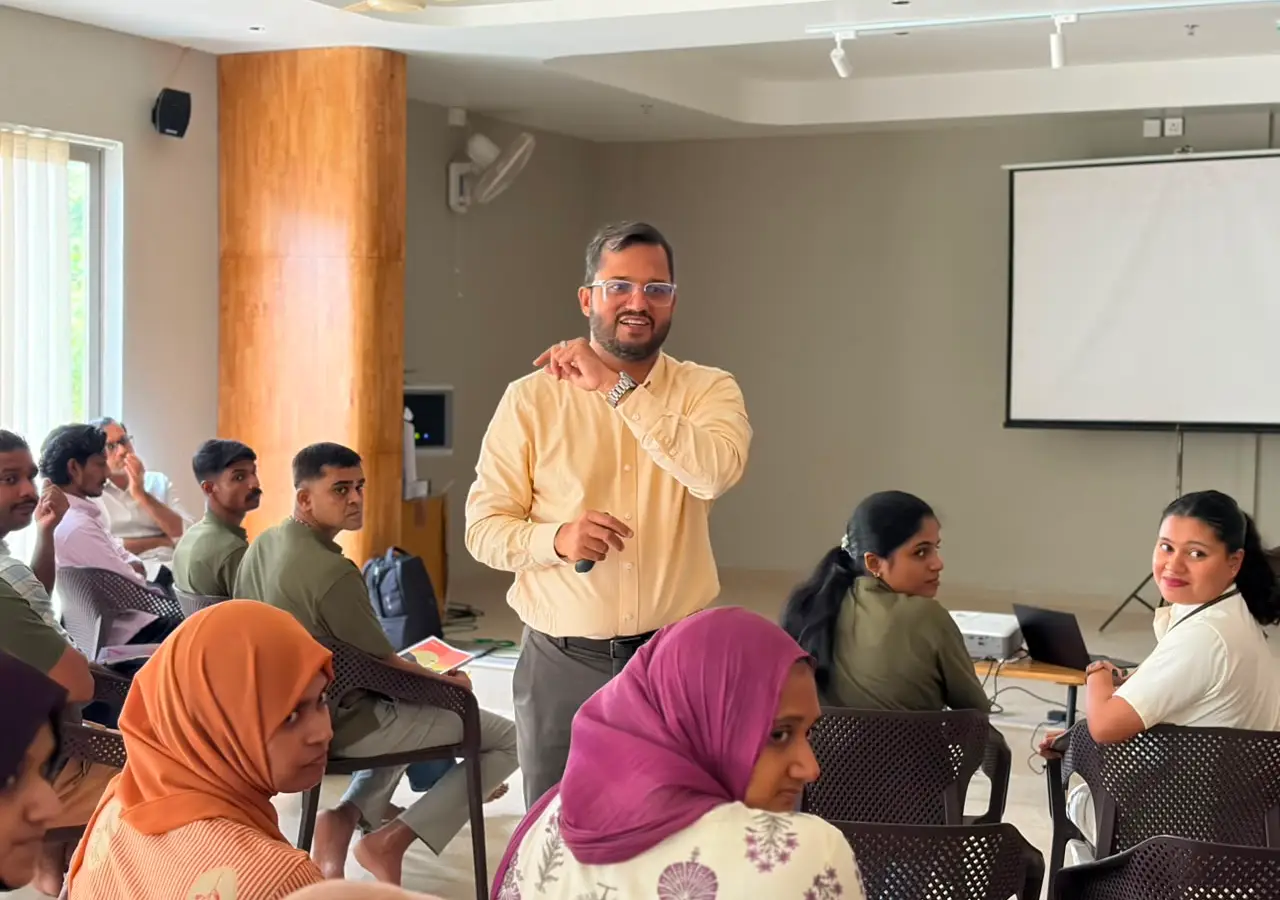
That idea was at the centre of The Memory Makers Workshop, a full-day training programme conducted by Spunic Hospitality at Shantara Naturopathy Retreat in Kozhikode on 4 August 2026.
The programme brought together Shantara’s frontline and operational team members to explore how everyday service interactions can become meaningful guest experiences.
Good service and a memorable experience are not the same thing
One of the central discussions during the workshop was the distinction between service and experience.
Service is the task itself. It can often be measured, timed and standardised. Experience is how the guest feels as a result of that interaction. As the workshop explored, service gets the job done, while experience creates the memory.
Consider something as simple as a guest asking for directions to the yoga hall.
Giving clear directions is good service. But if the guest has difficulty walking, accompanying them at their pace, informing the instructor and ensuring that suitable seating is available changes the nature of the interaction. The task is still simple, but the experience is different. This was one of the practical scenarios explored during the workshop.
The same thinking can be applied throughout a guest’s stay. A team member might notice that someone waiting for a consultation appears anxious and offer them a quieter place to sit while keeping them informed. If a guest’s sleep is disturbed by noise, resolving the immediate problem and checking later whether they are comfortable adds another layer of care.
These are small differences, but they illustrate an important principle in hospitality: completing the task is only one part of the guest experience.
Delivering HOPE
The workshop was built around HOPE, short for Hospitality-Oriented Patient Experience, a framework developed by trainer Sadikh P. Padikkal.
At Shantara, the framework was used to help the team think beyond transactional service and focus on the human experience behind each interaction. HOPE places the individual at the centre and encourages hospitality that is warm, human and personal.
In practice, this means paying attention, listening, anticipating needs, personalising interactions, taking ownership and following through.
For example, one workshop scenario considered a returning guest who prefers a quiet journey. Remembering that preference and preparing the vehicle accordingly, with the music turned off, water ready and the temperature adjusted before pickup, requires no elaborate process. It requires someone to have noticed, remembered and acted before being asked.
That shift from simply responding to anticipating was an important theme throughout the programme.
What could you do with ₹100 and 10 minutes?
One of the exercises brought this idea down to a very practical level.
Participants were asked:
If you had just ₹100 and 10 minutes, what memorable moment could you create for a guest today?
The team was asked to consider what a guest might need without having explicitly requested it, design a small gesture around that need, share the idea with the group and choose something they could actually put into practice.
The constraint encouraged participants to think beyond the assumption that memorable hospitality requires expensive gestures, additional infrastructure or complicated processes. Instead, the exercise brought the focus back to observation, thoughtfulness and initiative.
For hospitality teams, the question itself is worth carrying into everyday work:
What can we do with what we already have to make a guest’s experience better today?
Building the service culture before opening
The Memory Makers Workshop was not a standalone training assignment.
Shantara is an ongoing hospitality consulting project of Spunic Hospitality. Spunic has been involved in the pre-opening of the project and continues to work alongside Shantara’s leadership through an 18-month handholding engagement as the property moves from pre-opening into operations.
Training frontline and operational teams is one part of that wider work.
Processes, standards and infrastructure are necessary for a hospitality business to operate well, but guests ultimately experience a property through its people. Developing the desired service culture therefore needs to happen alongside the development of the operation itself.
The Memory Makers Workshop was one step in building that culture at Shantara.
About the trainer
Sadikh P. Padikkal is a hospitality trainer and customer experience coach who is also part of Spunic Hospitality.
He brings nearly three decades of experience across airline and airport operations, customer service and team leadership. His aviation career began in 1998, and he currently works with Emirates Airline as a Ground Dispatcher, a position he has held since 2007. He previously held operational roles with Air Seychelles and served as Operations Manager for Air Gabon at Dubai International Airport.
Alongside his aviation career, Sadikh works in hospitality training and guest experience. He is a certified trainer and holds a Master’s degree in Psychology. His areas of focus include hospitality training, guest experience, leadership development, team performance and service culture.
The workshop concluded with a simple commitment that captured the thinking behind the day:
“I do not simply deliver service. I deliver HOPE.”
For Spunic Hospitality, building a hospitality project is not only about getting the operation ready for opening. It is also about helping the people behind it develop the standards, behaviours and service culture that guests will ultimately experience.
Preparing a hotel or resort for opening? Learn more about Spunic Hospitality’s pre-opening and hospitality consulting services.